

August in the Mid-Atlantic is a study in contrasts. The mornings still carry a hint of the season’s earlier gentleness, but by midday the region’s Zone 6b–7b gardens are baking under the kind of heat and humidity that separates the resilient plantings from the merely hopeful. This is the month when a garden — and the person tending it — either learns to slow down or burns out trying to keep pace. The smartest move right now is triage: water deeply but less often to encourage roots to dig for moisture instead of lounging near the surface, mulch anything that’s looking parched, and resist the urge to fertilize stressed plants, which only pushes tender new growth into conditions that will punish it. If there’s a meditative task for August, it’s early-morning watering — hose in hand before 8 a.m., before the heat index climbs, is as much a reset for the gardener as it is a lifeline for the beds.
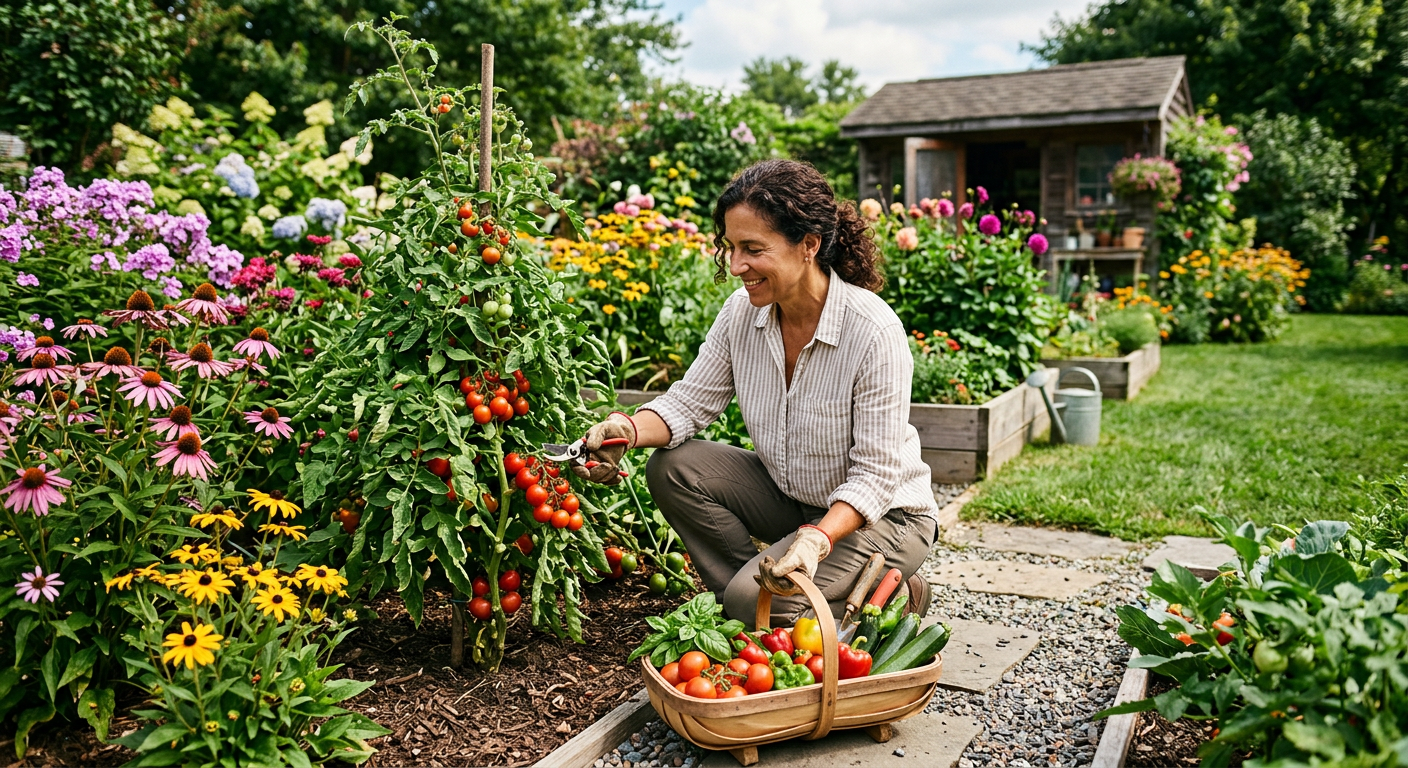
Harvest season is in full swing, and it rewards attention. Tomatoes, peppers, and summer squash are producing faster than most kitchens can keep up with, so this is the moment to pick daily rather than let fruit linger and invite rot or pests. Basil wants regular pinching to stay bushy and delay bolting in the heat. It’s also prime time to start a second round of fast-maturing crops — bush beans, cucumbers, and quick greens like arugula — for a late-summer harvest before fall officially arrives. For anyone growing herbs specifically for the kitchen or for drying, late morning after the dew has burned off but before the afternoon sun concentrates the oils out of the leaves is the ideal picking window.
Looking ahead, August is also when Mid-Atlantic gardeners quietly begin the transition toward fall. Cool-season vegetables like broccoli, kale, and lettuce can be started indoors or in a shaded spot now for transplanting in September. It’s a good time to divide overcrowded perennials such as daylilies and hostas once the worst heat breaks later in the month, giving them a full season to re-establish before winter. And for anyone tending a pollinator patch, late summer natives like black-eyed Susan, coneflower, and joe-pye weed are hitting their stride — a reminder that even in the sluggish heart of summer, the garden is already working toward what comes next.