
New 2025 research showing that geosmin — the compound that gives soil its earthy scent — may alleviate depression and reduce stress makes a compelling case for slow, deliberate time in the garden as a form of mood regulation, not just a hobby.
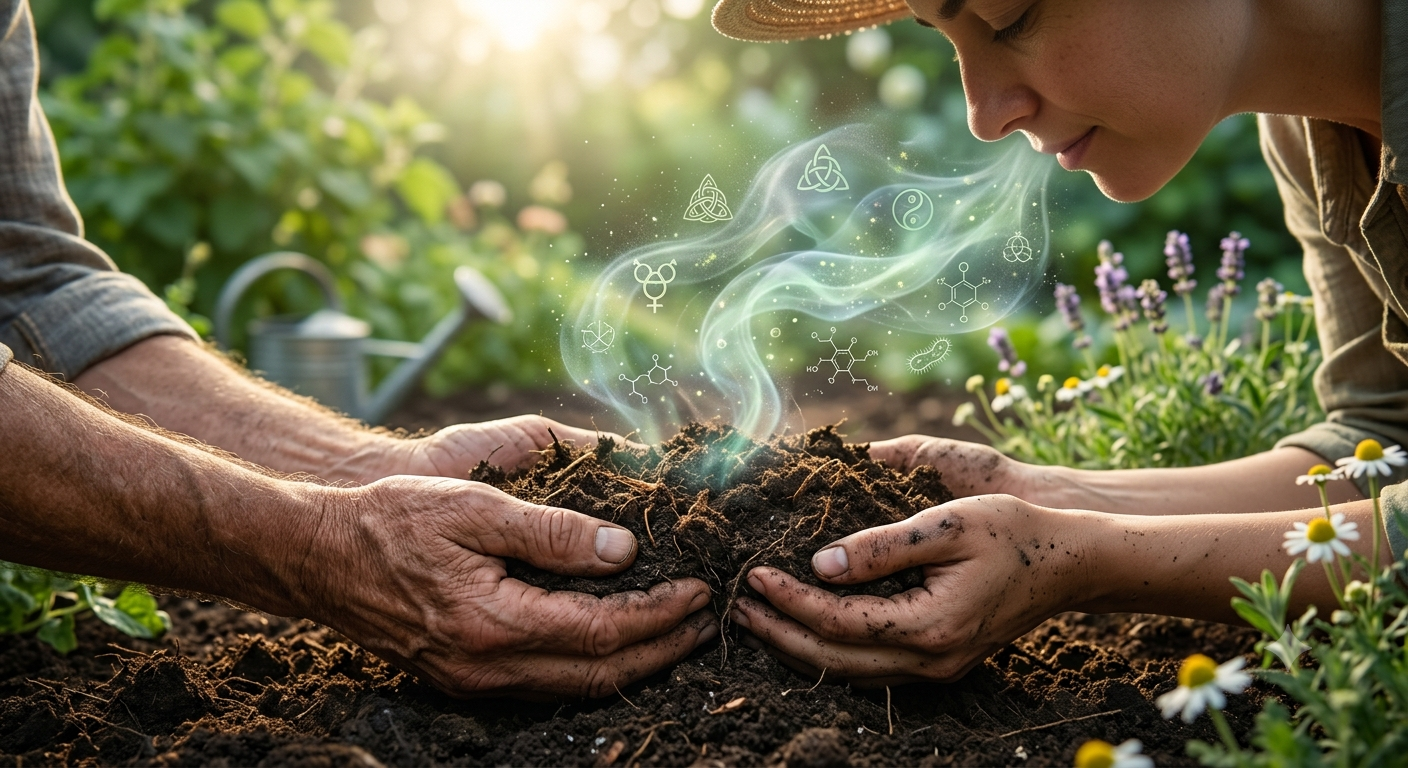
There’s a moment when you press your hands into damp soil and something shifts — a kind of exhale that happens before you’ve decided to relax. For a long time this was written off as nostalgia, or the simple pleasure of being outside. But researchers are now looking more closely at geosmin, the organic compound produced by *Streptomyces* bacteria in soil, and finding that its effects on the human nervous system may be more than atmospheric. Studies emerging in 2024 and 2025 have begun mapping how olfactory exposure to geosmin activates pathways in the brain linked to mood regulation — including areas involved in the processing of serotonin. The nose, it turns out, has a remarkably short route to the limbic system, and soil may have been sending signals along it for as long as humans have been digging.
What makes this research worth sitting with is the mechanism. Unlike many mood-related interventions, geosmin doesn’t require sustained practice or a learning curve. You don’t have to meditate correctly or hit a particular heart rate. You just have to be close enough to living soil to breathe it in — ideally slowly, and with some intention. Some researchers frame this in terms of evolutionary priming: the scent of moist earth historically signaled water, food, and safe ground, so the nervous system may have been wired to read it as a sign of security. Whether you find that poetic or purely biological, the practical implication is the same — the act of turning compost, crouching over a bed after rain, or simply pressing your palms flat against the ground isn’t just doing something. It may be *receiving* something.
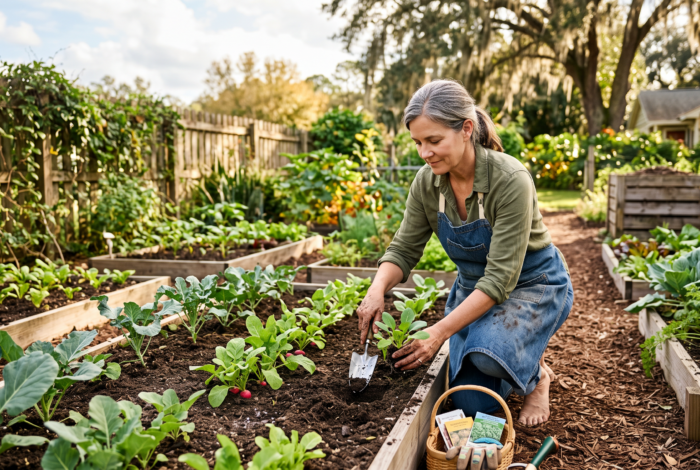
The gardening practice this points toward is less about productivity and more about pace. A slow pass through the garden after a difficult week — not to weed aggressively or plan next season, but just to be at soil level and inhale — starts to look less like avoidance and more like nervous system care. Barefoot contact and low, close attention to the ground amplify the effect, keeping you oriented downward and present rather than scanning or planning. If you want a structure: spend five minutes at the start of a garden session just crouching, hands in the soil, breathing through your nose. Notice what changes before you’ve done a single task. This isn’t aromatherapy as usually packaged — it’s older than that, and considerably less expensive.