
October is the counterintuitive reset Florida gardeners live for — as the rest of the country winds down, the Sunshine State’s cool-season planting window opens, making the act of beginning again in autumn a quiet meditation on renewal.
There’s a particular kind of joy that comes from doing the opposite of everyone else — and Florida gardeners know it well. While the rest of the country is pulling up stakes and putting the garden to bed, October arrives in the Sunshine State as something closer to a starting gun. Temperatures that spent the summer locked in the nineties finally soften. The humidity breaks. The soil, which was frankly hostile to most vegetables just weeks ago, becomes workable again in a way that feels almost like a gift. For gardeners accustomed to the northern calendar, this inversion takes some unlearning. But once you internalize it — once you feel the October air and think *planting* instead of *finishing* — something shifts, and the season becomes yours in a new way.
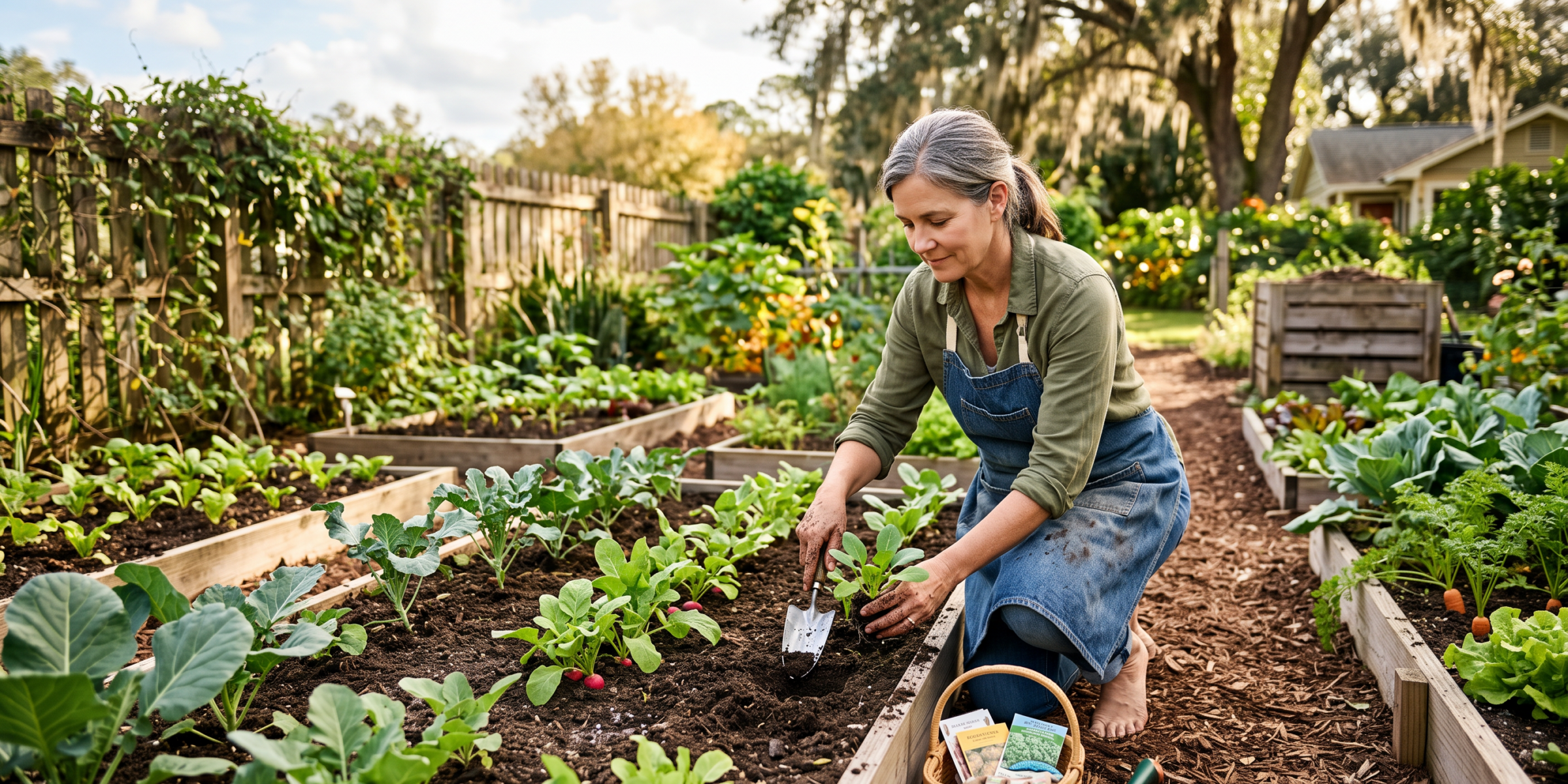
The practical window is real and relatively forgiving. Cool-season crops like kale, collards, lettuce, carrots, beets, and snap peas go in now through late November across most of Florida, with South Florida stretching that window even further into winter. Herbs that sulked or bolted through the summer — cilantro, dill, parsley — suddenly thrive. It’s worth starting with a soil amendment pass: summer heat and heavy rain tend to compact and leach Florida’s already sandy beds, so working in compost before planting isn’t just good practice, it’s the difference between a crop that limps along and one that actually produces. Raised beds and containers also recover faster, which makes them worth prioritizing if your in-ground soil is still waterlogged from the rainy season.
What makes this moment quietly meaningful, beyond the practical, is what it asks of you: to begin again, on an unfamiliar schedule, trusting a season that doesn’t look the way seasons are supposed to look. There are no red leaves, no first frost to mark the occasion. The shift is subtler — a few degrees of relief, a different quality of morning light, the appearance of seedlings at the nursery where there were none. You have to pay attention to notice it, and paying attention is most of what gardening asks in the first place. That’s the real gift of Florida’s second spring: it teaches you to read your own patch of earth on its own terms, rather than borrowing a rhythm that was never meant for here.